On July 29, 2025, the International Symposium on the Revision of the National Standard GB/T 50785 "Evaluation Standard for Indoor Thermal Environment in Civil Buildings" (hereinafter referred to as the "Standard"), led by Chongqing University and China Academy of Building Research, was successfully held at Robinson College, University of Cambridge, UK. The symposium was co-chaired by Professor Baizhan Li from Chongqing University, the chief editor of the Standard, and Professor Bjarne W. Olesen from the Technical University of Denmark who was the former president of the American Society of Heating, Refrigerating and Air-Conditioning Engineers (ASHRAE) and a member of the International Standards Committee ISO TC 163/205. Attendees included internationally renowned experts in sustainable building design, such as Doug King, Fellow of the Royal Academy of Engineering (UK); Dr. Simon Hodder, Chair of the International Standards Committee (ISO/TC 159/SC 5) from Loughborough University, UK; Professor Risto Kosonen, President of the Federation of Finnish Heating, Ventilation, and Air Conditioning Associations and a professor at Aalto University, Finland; and Professor Hazim Awbi, founder of the Indoor Environment and Energy Research Group (IEERG) and a professor at the University of Reading, UK, and Standard’s drafting team, including Professor Runming Yao, Professor Hong Liu, Professor Wei Yu, and Associate Professor Chenqiu Du from Chongqing University.
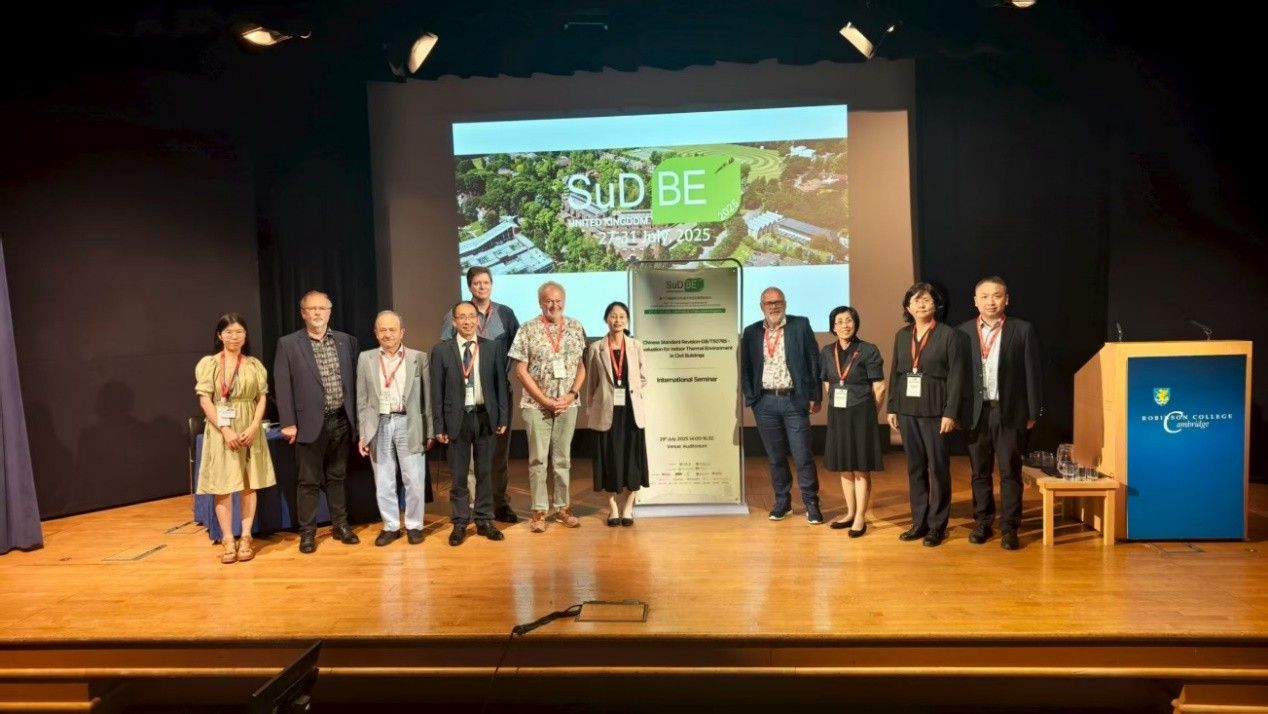
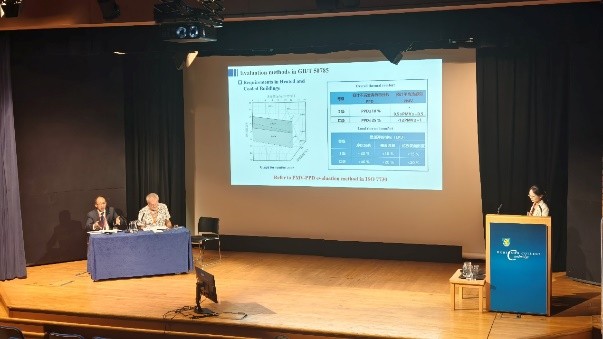
At the symposium, Professor Baizhan Li from Chongqing University, the chief editor of the Standard, first introduced the background, significance, and foundational work related to the development of the Standard. Associate Professor Chenqiu Du, also from Chongqing University, provided a detailed presentation on the status of international standards related to thermal environments, the original background of the Standard, and the planned revisions—including the framework, key updates and additions, as well as major innovations. Subsequently, the participating experts exchanged views and discussions on the revision plan for the Standard, the emphasis of its functions such as guiding “evaluation” and “design,” and the needs of engineers, designers, governments, and multiple user groups. In particular, they addressed key issues such as the evaluation of environments without artificial heating or cooling sources, and thermal comfort assessments for specific groups including children and the elderly, personalized thermal comfort, and sleep environments. In conclusion, Professor Baizhan Li and Professor Bjarne summarized the forum, emphasizing that the new version of the Standard can incorporate innovations suited to China’s national conditions and industry needs. They also expressed gratitude to all experts for their active participation and support.




The successful hosting of the international symposium has provided important global perspectives and technical support for the revision of the Standard. By aligning with international standard systems such as ISO and EN, and through in-depth discussions with internationally renowned experts, the scientific rigor, advancement, and international applicability of the new version of the Standard have been further ensured. The outcomes of the symposium will promote the alignment of China’s building environmental assessment standards with international benchmarks, enhancing the influence and voice of Chinese standards in the global construction field and sustainable development efforts. In the future, the drafting team will continue to deepen international cooperation, supporting the globalization of China’s building environmental assessment standards and contributing Chinese expertise to the improvement of global built environments and sustainable development.